
Restaurant Furniture Refinishing and Reupholstery: 7 High-ROI Secrets for Dining Spaces
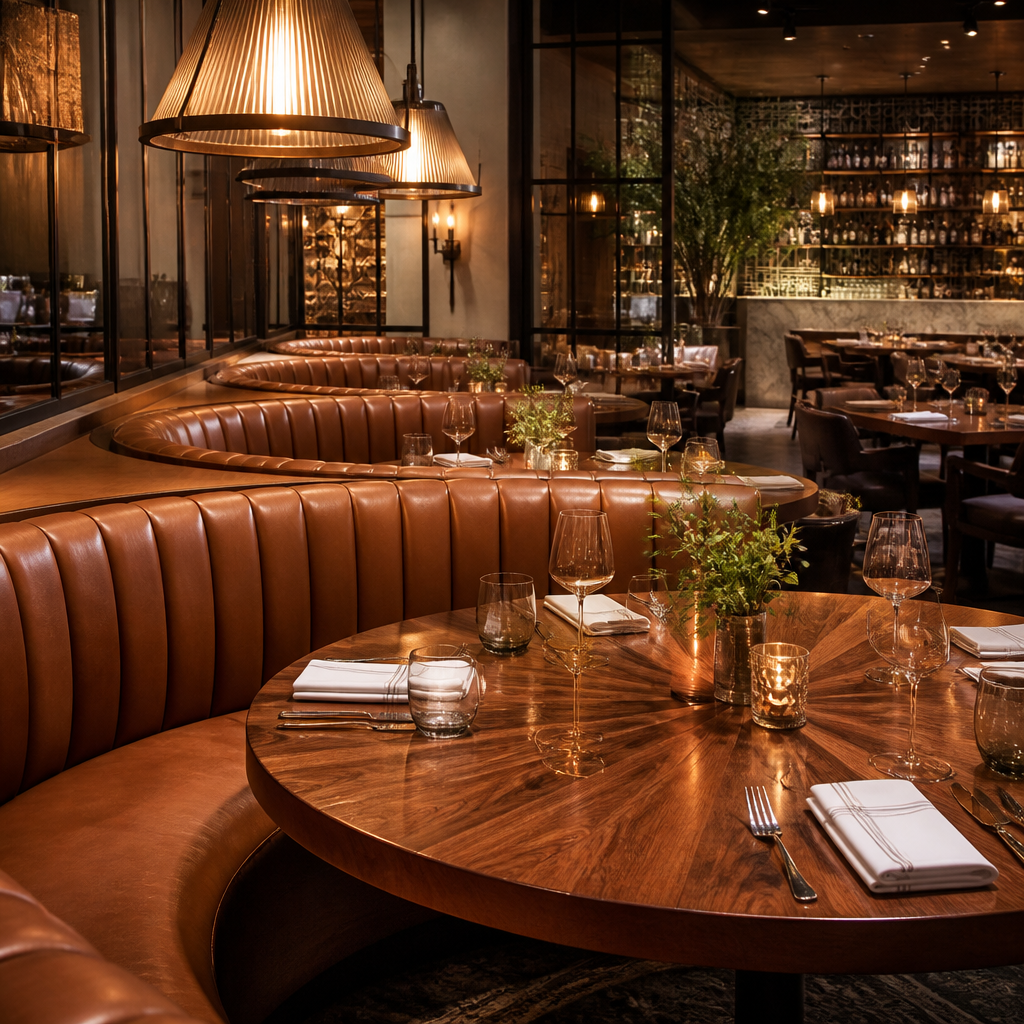
Refinishing & Tabletop Detail and Newly reupholstered leather vinyl booth.
High-volume commercial dining environments place relentless physical demands on hospitality assets. Guests judge the hygiene, luxury level, and operational standards of a hospitality venue within seconds of being seated. When dining room assets show wear—frayed vinyl banquettes, torn booth seams, water-ringed solid walnut tabletops, and scratched bar facings—the entire brand reputation takes an immediate hit.
Implementing professional restaurant furniture refinishing and reupholstery allows dining room operators, hotel food and beverage directors, and hospitality facility managers to restore structural integrity, meet stringent commercial safety regulations, and elevate patron comfort without the crippling expenses and supply chain delays of buying new contract furniture.
Through precision surface restoration, architectural millwork rejuvenation, and heavy-duty contract textile rebuilding, restaurant furniture refinishing and reupholstery delivers maximum operational return on investment (ROI). This comprehensive guide details the technical engineering, textile science, regulatory compliance, and off-hours scheduling required to execute flawless dining room restorations.
Table of Contents
The Financial & Operational Advantages of Commercial Restoration
Booth & Banquette Rebuilding in Restaurant Furniture Refinishing and Reupholstery
Contract Textile Selection: Crypton, Heavy-Duty Vinyls, and Full-Grain Leathers
Commercial Wood Refinishing for Tables, Bar Tops, and Hardwood Seating
Fire Safety Regulations and Health Department Sanitation Compliance
Preventing Revenue Loss: Turnaround Logistics & Phased Staging
The Financial & Operational Advantages of Commercial Restoration
When hospitality seating and tables show heavy wear, operators face a crossroads: replace everything with catalog contract furniture or partner with an artisan commercial workroom for restaurant furniture refinishing and reupholstery.
Cost Comparison: Refurbishment vs. Replacement
Capital Expense Savings: Full replacement requires purchasing new frames, freight delivery fees, unpacking labor, assembly, and disposal of existing assets. In contrast, comprehensive commercial restoration typically costs 40% to 60% less than equivalent commercial-grade new units.
Preserving Custom Architectural Frames: Most older commercial banquettes and solid hardwood dining tables were custom-built to match the exact floor plan, wall reveals, and architectural millwork of the room. Factory replacements rarely match custom dimensions, resulting in awkward gaps, lost seating density, and expensive secondary carpentry.
Structural Superiority: Vintage or custom commercial seating frames built from kiln-dried hardwoods (such as maple, oak, and ash) with double-doweled and corner-blocked joinery are vastly superior to mass-produced flat-pack contract furniture constructed with particle board and staple joinery.
Environmental Sustainability & Green Building Credits
Commercial restaurant renovations generate tons of landfill waste every year. Reusing structural hardwood skeletons, renewing dense metal supports, and replacing only degraded wear layers aligns with sustainable hospitality standards. This approach directly supports initiatives recognized by the U.S. Green Building Council LEED Certification Programs, allowing venues to showcase eco-conscious practices to an increasingly discerning demographic.
Booth & Banquette Rebuilding in Restaurant Furniture Refinishing and Reupholstery
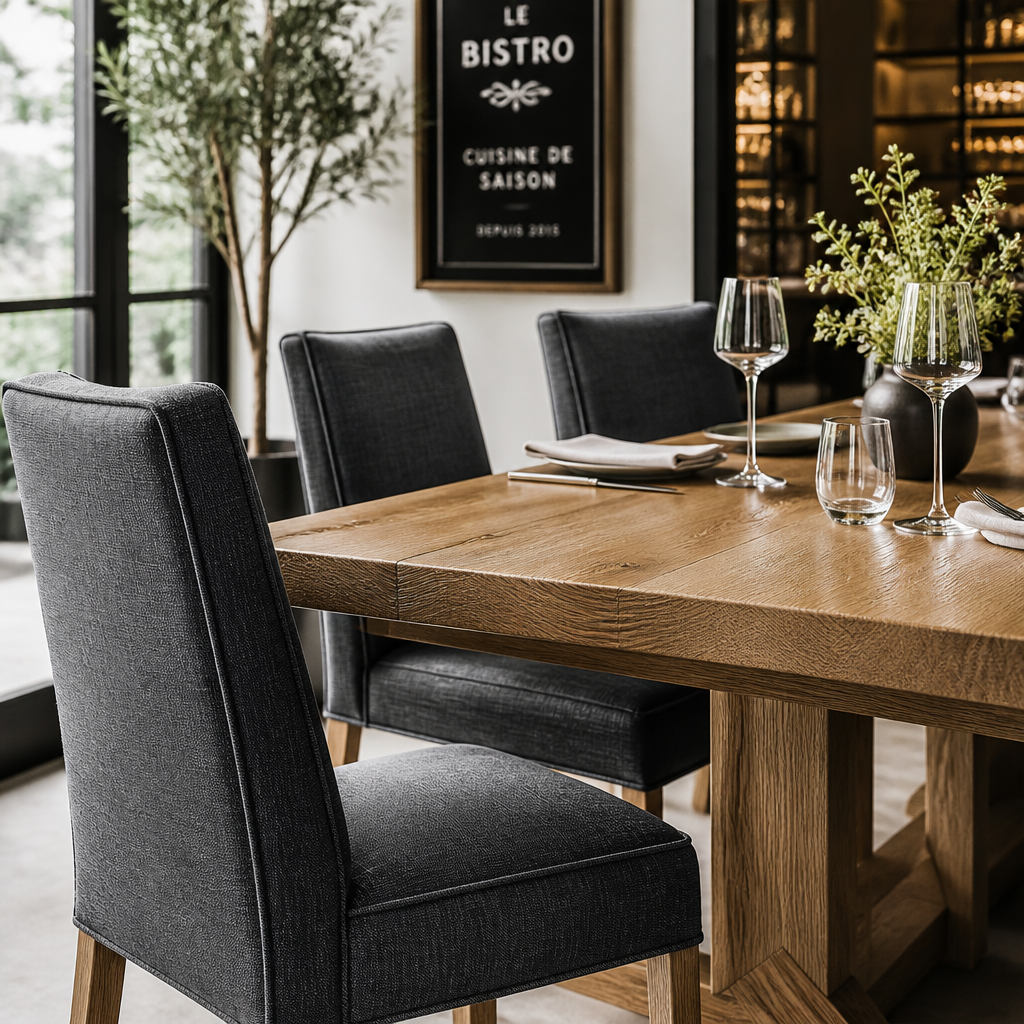
Architectural vignette of a luxury bistro dining setting. A restored solid white oak dining table with a smooth, satin protective commercial finish and visible natural wood grain.
Banquette seating and custom booths are the highest revenue-generating real estate in any dining establishment. Guests routinely request booths over free-standing floor tables due to perceived intimacy, acoustic dampening, and cushioned physical comfort. However, high turnover causes severe internal fatigue over time.
+-----------------------------------+--------------------------------------+---------------------------------------+
| Component                         | Common Commercial Failure Point      | Master Workroom Restoration Protocol  |
+-----------------------------------+--------------------------------------+---------------------------------------+
| Seat Foam Cushioning              | Deep indentation, bottoming out      | High-Resiliency (HR) 2.5–3.0 lb foam  |
| Suspension Springs & Webbing      | Sagging centers, broken sinuous wire | 8-gauge no-sag springs & steel clips  |
| Corner Joints & Kickboards        | Racked frames, gouged laminate bases | Glued hardwood cleats & brass plating |
| Seams & Topstitching              | Thread blowout, liquid penetration  | Bonded nylon thread, weltless seams   |
+-----------------------------------+--------------------------------------+---------------------------------------+
High-Density and High-Resiliency (HR) Foam Rebuilding
Standard consumer upholstery foam carries an internal density of 1.2 to 1.8 pounds per cubic foot. In a restaurant with two to three table turns per service, standard foam compresses within months, causing diners to sink uncomfortably against the rigid wooden deck frame.
In expert restaurant furniture refinishing and reupholstery, commercial artisans strip seating to the frame and install High-Resiliency (HR) open-cell poly foams with a minimum density of 2.5 to 3.0 pounds and an Indentation Load Deflection (ILD) rating between 35 and 45. To enhance surface softness without compromising deep support, a wrapped Dacron polyester batting layer is bonded to the core, sealed with a moisture-barrier liner before final fabric tailoring.
Structural Suspension and Webbing Upgrades
Sagging seating undermines posture, leaving guests eager to finish quickly and leave. Commercial workrooms replace broken 9-gauge zig-zag springs with heavy-duty 8-gauge sinuous steel suspension systems anchored into kiln-dried frame rails using insulated metal clips that prevent annoying squeaks. For European-style flat banquettes, interwoven elastomeric commercial seat webbing (such as Pirelli webbing) provides smooth support across long continuous benches.
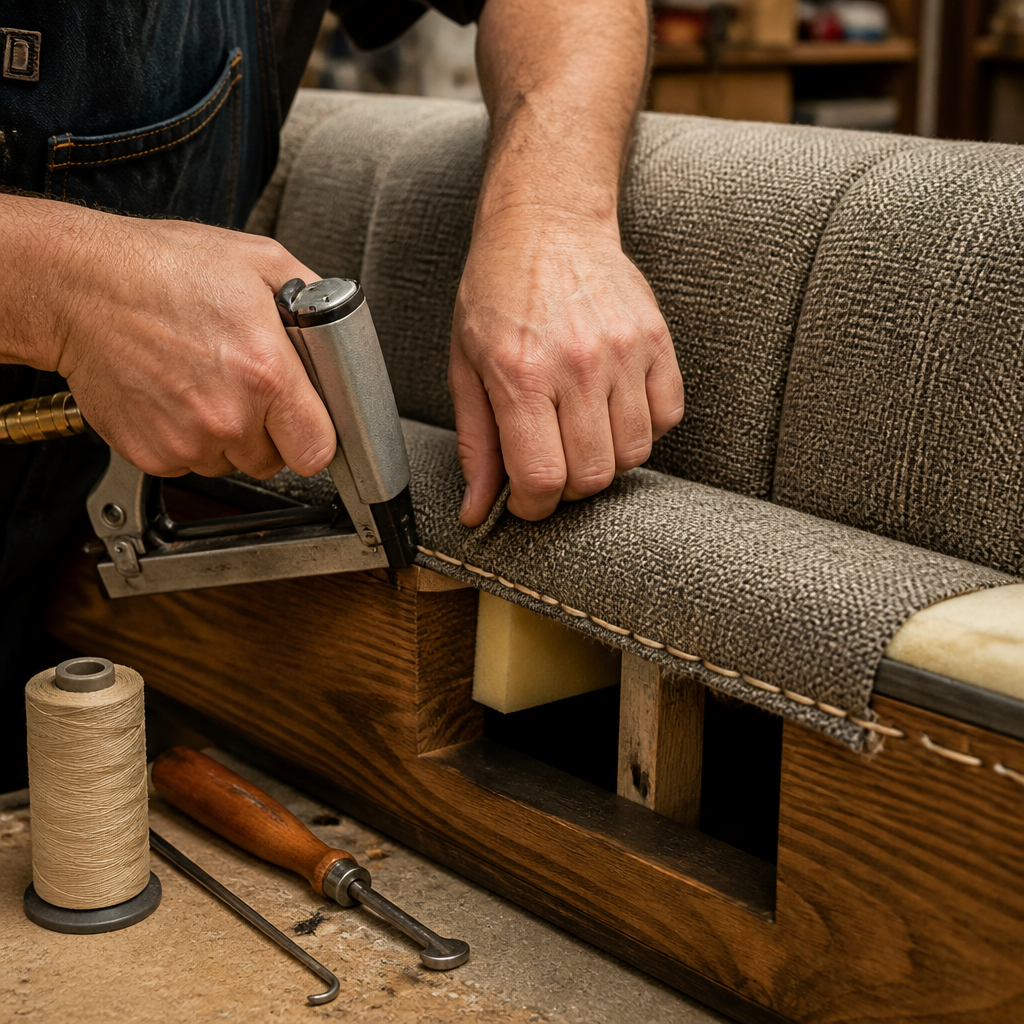
Craftsmanship & In-Progress Detail:
Close-up artisan shot of commercial furniture reupholstery in a professional workshop. Clean focus on precise stitching, heavy thread, and wood grain detail, warm workshop lighting.
Contract Textile Selection: Crypton, Heavy-Duty Vinyls, and Full-Grain Leathers
Material selection makes or breaks commercial furniture longevity. A fabric that feels luxurious in a residential living room can fail within weeks under the onslaught of greasy foods, acidic citrus juices, spilled red wine, denim dye transfer, and hospital-grade sanitizing chemicals.
[ Outer Wear Layer: Crypton / Silicone / Top-Grain Leather ]
                             │
                             ▼
[ Integrated Vapor / Stain Barrier (Moisture Barrier Membrane) ]
                             │
                             ▼
[ Antimicrobial Barrier Treatment (Resists Fungal & Bacterial Odors) ]
                             │
                             ▼
[ Flame-Retardant Cal 117 / NFPA 260 Fire-Shield Layer ]
                             │
                             ▼
[ High-Resiliency Mold-Resistant Commercial Foam Core ]
Wyzenbeek Abrasion Standards & Double Rub Testing
When reviewing textile options during restaurant furniture refinishing and reupholstery, the most crucial metric is the Wyzenbeek cotton duck double-rub rating, administered under standards established by the American Society for Testing and Materials (ASTM):
Residential Standard: 15,000 – 25,000 double rubs (unsuitable for dining spaces).
General Commercial: 30,000 – 50,000 double rubs (suitable for low-turnover executive lounges).
Heavy Commercial Hospitality: 100,000 – 250,000+ double rubs (essential for busy dining spots, sports bars, and hotel breakfast rooms).
Engineered Performance Textiles: Crypton & Nanotex
Engineered woven textiles from manufacturers like Crypton Performance Fabrics provide the visual elegance and breathability of linen, chenille, or jacquard while incorporating an impenetrable, breathable moisture barrier on the backing. Stains sit on the outer fiber surface where they can be wiped clean with warm water and mild enzyme detergents, preventing liquid liquids from reaching the internal foam.
Polyurethane (PU) and Coated Silicone vs. Cheap PVC Vinyl
Traditional PVC (polyvinyl chloride) vinyl often turns stiff, brittle, and cracked due to plasticizer migration caused by constant cleaning chemicals and skin oils. Modern high-performance coated fabrics utilize 100% silicone or advanced polycarbonates that remain supple, resist ink/denim transfer, and tolerate harsh quaternary ammonium sanitizers.
Top-Grain and Semi-Aniline Hospitality Leather
For fine dining steakhouses, members-only clubs, and craft cocktail speakeasies, authentic leather remains unmatched. Semi-aniline top-grain hides receive a light protective surface coat that guards against food oils and water spotting while preserving the natural grain, breathability, and rich patination over years of service.
To explore the tactile difference between commercial-grade leathers, performance textiles, and custom wood finishes, visit the artisan craft room at Marina's Crafts, where each material is hand-vetted for commercial durability.
Commercial Wood Refinishing for Tables, Bar Tops, and Hardwood Seating
Table surfaces are the most scrutinized touchpoint in any food service establishment. A sticky surface, chipped urethane coat, or clouding from hot plates immediately suggests poor hygiene to guests.
Precision Chemical Stripping & Grain Neutralization
Commercial refinishing begins with the complete removal of degraded lacquers, conversion varnishes, and accumulated surface oils. Unlike harsh dip-tanks that dissolve internal glue joints and loosen dowels, careful hand-stripping and orbital sanding preserve the structural integrity of solid butcher blocks, parquet tops, and matched wood veneers.
Pore Grain Filling and Custom Color Matching
Grain leveling is vital for restaurant sanitation. Open-grained woods like red oak, white oak, ash, and walnut harbor food particles and sanitizing liquids in their microscopic pores if not filled. Artisans use silica-based paste wood fillers to create a glass-smooth surface before applying custom aniline dye stains or pigment washes that complement your interior millwork and brand identity.
Industrial-Grade Protective Finishes
Residential varnishes and off-the-shelf polyurethane coats cannot survive hot plates, boiling water, alcohol splashes, and daily wipe-downs with commercial cleaning chemicals. Professional restaurant furniture refinishing and reupholsteryrelies on industrial finishing chemistry:
Post-Catalyzed Conversion Varnish (CCV): A two-part coating chemically cured with an acid catalyst, yielding a hard, cross-linked film that resists heat, water rings, and chemical softening.
Two-Part Polyurethane Finishing: Offers exceptional elasticity alongside chemical resistance, preventing finishes from cracking as seasonal humidity changes expand and contract solid timber tables.
Deep Pour Epoxy Coatings: Best for high-impact bar tops and live-edge communal tables that require a thick, high-gloss protective barrier impervious to glassware strikes.
Fire Safety Regulations and Health Department Sanitation Compliance
Commercial dining spaces are subject to rigorous regulatory oversight. Using residential materials during a remodel can trigger failed inspections, insurance claim denials, or mandatory closure orders.
California Technical Bulletin 133 (Cal 133) and Cal 117
In high-occupancy public dining spaces, upholstery assemblies (fabric, barrier cloth, foam, and frame) must satisfy flame-retardant performance protocols. Workrooms must follow testing standards outlined by the National Fire Protection Association (NFPA 260) and state guidelines:
CAL 117-2013: Regulates component flame resistance for individual upholstery materials.
CAL 133: A composite burn test evaluating an entire completed piece of furniture (foam, fabric, and frame combined). Achieving Cal 133 compliance requires sewing a fire-blocking barrier cloth (such as Kevlar or fiberglass-blend interlinings) beneath the decorative cover.
Non-Porous Surface Requirements for Health Inspections
Local health departments monitor seating surfaces for cracks, open seams, and peeling vinyl. Exposed polyurethane foam can absorb bodily fluids, spilled raw food juices, and liquid cleaners, transforming internal cushions into breeding grounds for mold, mildew, and bacteria. Maintaining sealed, intact furniture upholstery and closed-pore tabletop finishes eliminates red flags during unannounced health department inspections.
Preventing Revenue Loss: Turnaround Logistics & Phased Staging
The greatest challenge of commercial dining refurbishment is avoiding table downtime. Taking 30 booths or 40 tables out of service on a Friday night directly destroys thousands of dollars in covers and gross profit.
[ Phase 1: Off-Hours Measuring & Prototype Fabric Fabrication ]
                                │
                                ▼
[ Phase 2: In-Shop Fabrication of Pre-Sewn Replacement Covers ]
                                │
                                ▼
[ Phase 3: Overnight On-Site Swap / Phased Off-Peak Shop Rotation ]
                                │
                                ▼
[ Phase 4: Final Quality Check Before Morning Breakfast / Lunch Service ]
Pre-Patterning and Off-Site Sewing: The workroom inspects, measures, and constructs all replacement seat covers, cushions, and foam modules in advance at the workshop.
Overnight and Off-Peak Transformation: Artisans work between the hours of 11:00 PM and 7:00 AM on Monday and Tuesday nights. Worn booth seats are detached, re-foamed, recovered, and reinstalled before the breakfast or lunch rush begins.
Phased Sectional Rotation: For extensive tabletop refinishing requiring multi-stage curing, tables are removed in small, balanced sections (e.g., 20% of the room at a time), with temporary loaner tables swapped in to keep seating capacity fully operational.
Integrating Dining Room Finishes with Window Architecture
True hospitality design requires cohesive material transitions across all surfaces. A beautifully refinished walnut tabletop and saddle-leather banquette can look discordant if paired with worn, faded, or ill-fitting blinds.
Drapes, Roman shades, and acoustic panels play a major role in dining room sound management. Bare tables, hard floors, and uncurtained glass create harsh reverberations that force diners to shout. Pairing commercial banquette reupholstery with tailored sound-absorbing window drapery creates an intimate acoustic environment that encourages guests to linger, order second drinks, and indulge in desserts.
For restaurant and boutique hospitality projects seeking custom-tailored drapes, thermal curtains, and motorized Roman shades that match luxury dining millwork, explore our specialized window atelier at Window Tailor Bespoke Treatments.
Master Checklist: Planning Your Restaurant Furniture Restoration
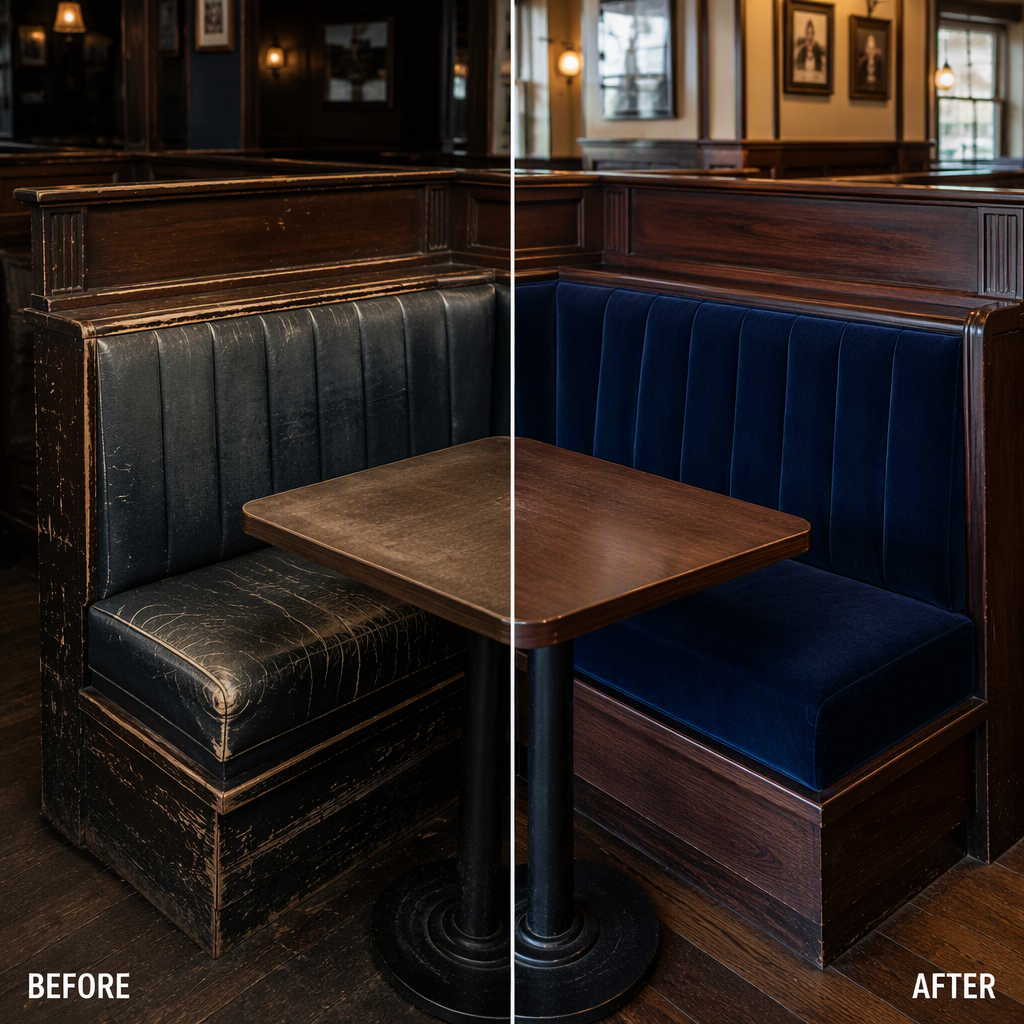
Split before-and-after view of a restaurant banquette booth. Left side shows worn, scratched wood trim and cracked, faded vinyl upholstery under dim light. Right side displays the identical booth fully restored with smooth satin-refinished dark walnut wood and deep navy-blue tailored commercial velvet upholstery.
Before commissioning restaurant furniture refinishing and reupholstery, review this technical verification checklist to ensure your project stays on schedule and on budget:
[ ] Frame Audit: Inspect solid wood and metal skeletons for loose dowels, cracked corner blocks, or rusted welds.
[ ] Rub Count Verification: Confirm that all selected seating fabrics feature a minimum of 100,000 double rubs on the Wyzenbeek scale.
[ ] Fire Code Compliance: Ensure your upholsterer provides formal documentation of CAL 117-2013 or CAL 133 compliance for local fire marshals.
[ ] Finish Specification: Verify that table coatings utilize two-part post-catalyzed conversion varnishes rather than standard single-stage lacquers.
[ ] Downtime Schedule: Agree upon overnight workroom dispatch or off-peak phased delivery terms to ensure zero loss of active dining covers.
Investing in restaurant furniture refinishing and reupholstery preserves original design investments, modernizes dining room presentation, enhances guest comfort, and protects operational margins for years to come.