
Transforming Hospitality Spaces: Commercial Booth Reupholstery and Ergonomic Seating Upgrades at a Santa Clara Hotel Restaurant
Hospitality environments operate under demanding conditions where design, guest comfort, and long-term durability must align seamlessly. In high-traffic dining venues, seating endures continuous daily turnover, direct weight stress, spills, and cleaning cycles. When restaurant banquettes and hotel dining booths begin to show wear or fail to offer proper lumbar and leg support, the overall guest dining experience suffers immediately.
At Marina’s Crafts, we provide specialized commercial furniture refinishing and reupholstery services across the San Francisco Bay Area and Silicon Valley, partnering with restaurants, boutique hotels, and corporate dining facilities to breathe new life into their interior furnishings.
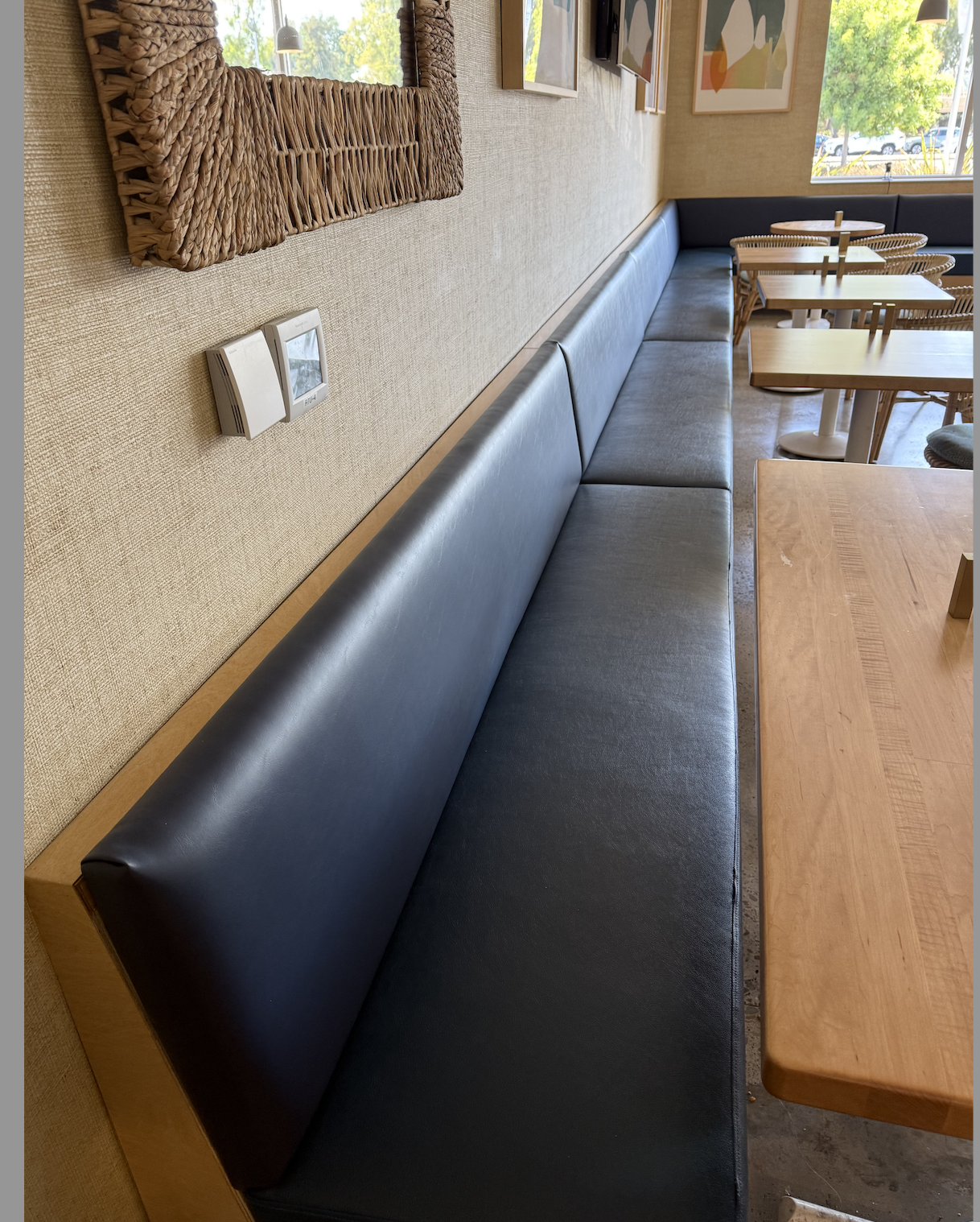
Recently, our team completed a comprehensive restaurant seating transformation inside a premier hotel in Santa Clara, California. The objective was twofold: restore the aesthetic elegance of the dining room banquettes using heavy-duty commercial vinyl and fundamentally modify the internal seating architecture to solve lingering patron comfort issues.
Below is a detailed look behind the scenes at how this project was executed, how strategic seating modifications elevate restaurant operations, and how cohesive furniture care—including our signature architectural wood refinishing—protects long-term commercial investments.
The Santa Clara Project: Commercial Booth Restoration & Structural Redesign
Hotel restaurants host diverse groups throughout the day, transitioning from breakfast buffets and corporate lunches to relaxed evening dinner services. Seating configurations must accommodate varying guest body types, sustained dining periods, and rigorous sanitation standards without showing premature wear.
Project Challenge: Sagging Support and Worn Surfaces
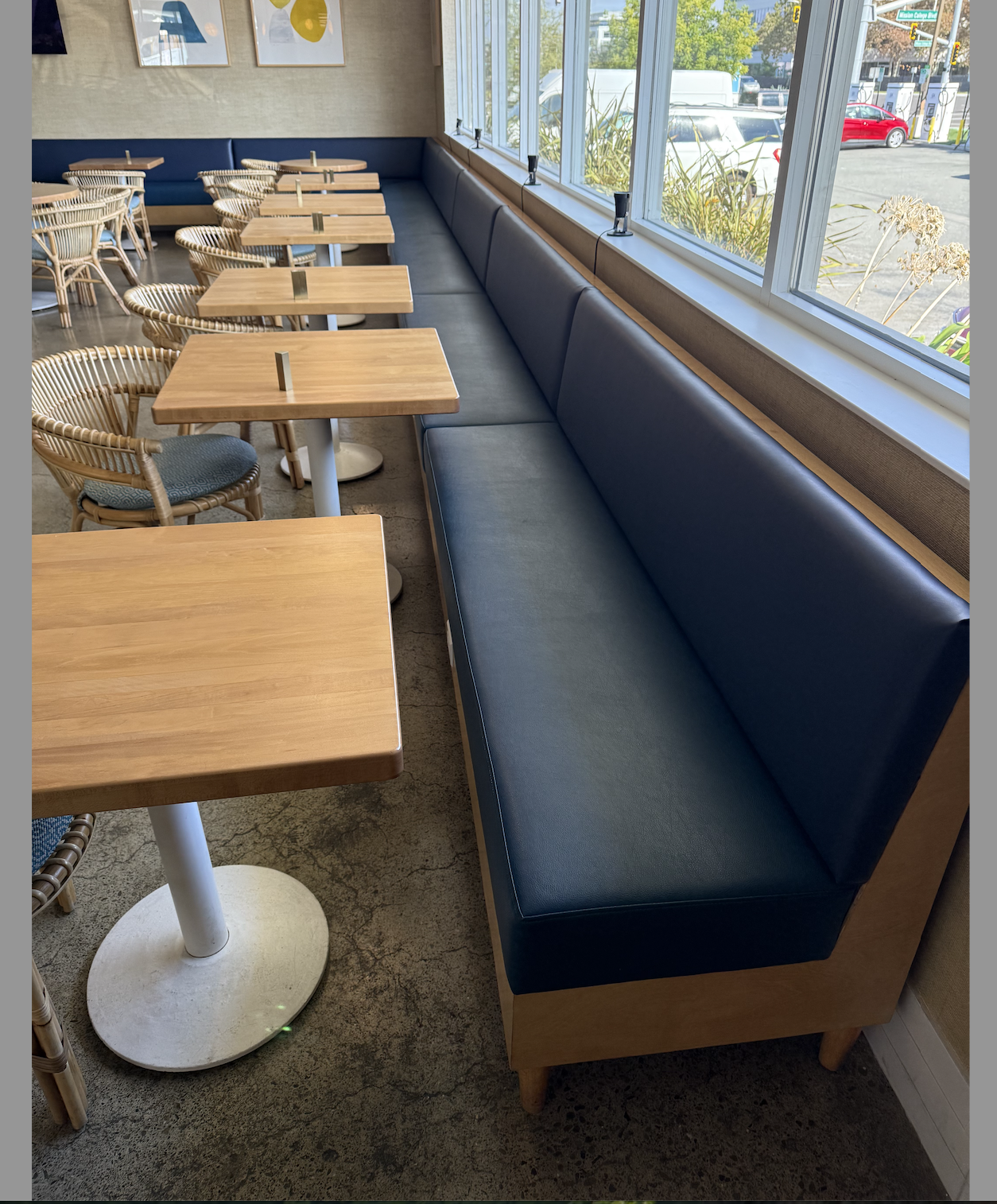
The existing built-in perimeter banquettes at the Santa Clara hotel restaurant featured solid blonde wood bases that framed long stretches of wall-to-wall booth seating. While the underlying perimeter frames remained structurally stable, years of high-volume dining had degraded both the comfort and the appearance:
The original surface material had developed surface cracking, friction glossing, and seam fatigue.
The interior seat foam had compressed significantly, creating uneven density pockets that caused diners to sink uncomfortably low toward the wooden base rails.
The backrest-to-seat angle lacked ergonomic lumbar contouring, leading to guest fatigue during extended meals or business meetings.
The height differential between the dining table surfaces and the compressed cushions created awkward posture alignment for seated guests.
Rather than undertaking the prohibitive cost, long lead times, and substantial operational downtime of demolishing and replacing custom built-in architectural millwork, the hotel management partnered with Marina’s Crafts for a full on-site and workshop commercial restoration plan.
Step-by-Step Execution: Engineering Long-Term Comfort
Successful commercial reupholstery requires more than pulling new fabric over old cores. For hospitality furniture to perform under daily load, the restoration process must address foundational framing, spring systems, and foam mechanics.
       COMMERCIAL SEATING RESTORATION WORKFLOW
 ┌────────────────────────────────────────────────────────┐
 │ 1. Teardown & Assessment of Architectural Framing      │
 └──────────────────────────┬─────────────────────────────┘
                            ▼
 ┌────────────────────────────────────────────────────────┐
 │ 2. Structural & Ergonomic Seating Redesign             │
 │    (Base re-pitching, lumbar angle recalibration)      │
 └──────────────────────────┬─────────────────────────────┘
                            ▼
 ┌────────────────────────────────────────────────────────┐
 │ 3. High-Resilience Multi-Layer Foam Engineering        │
 │    (Bonded core + ILD comfort crown wrapping)          │
 └──────────────────────────┬─────────────────────────────┘
                            ▼
 ┌────────────────────────────────────────────────────────┐
 │ 4. Commercial-Grade Upholstery Tailoring & Fitting     │
 │    (Marine/hospitality performance vinyl installation) │
 └──────────────────────────┬─────────────────────────────┘
                            ▼
 ┌────────────────────────────────────────────────────────┐
 │ 5. Final Alignment, Inspection & Client Handover       │
 └────────────────────────────────────────────────────────┘
1. Architectural Teardown & Substructure Evaluation
Our team systematically removed the booth cushion units while keeping the fixed architectural wood frames intact. Every structural joint was inspected for internal play, squeaks, and fastener fatigue. Heavy-use commercial benches often loosen around anchor points over time; our technicians reinforced internal corner gussets and cross-braces to eliminate deflection under multi-person loads.
2. Ergonomic Adjustments and Seating Geometry
The central client directive was to make the seating substantially more comfortable:
Seat Height Recalibration: When booth cushions compress below standard dining heights (typically 18 to 19 inches from the floor), patrons sit too low relative to a 30-inch dining table top. We elevated the finished seat deck height by reconstructing the foundation profile.
Pitch and Lumbar Adjustment: Sitting at a 90-degree right angle induces lower back tension over time. We re-angled the back support slope slightly, building out dedicated lower lumbar support into the backrest panels so diners sit comfortably upright without feeling pitched forward or slouching back.
Firm Seat Transitions: In long, bench-style banquettes, guests moving in and out can cause neighboring seats to rock or dip. We stabilized the horizontal seating decks with high-tensile support webbing and rigid sub-framing to maintain consistent independent support across every seating position.
3. High-Density, Flame-Retardant Commercial Foam Replacement
All degraded polyurethane foam was stripped down and replaced with multi-layer commercial cushioning:
Base Foundation Layer: A high-density, high-ILD (Indentation Load Deflection) composite foam base prevents bottoming out against the frame beneath.
Comfort Cushion Crown: A medium-resilience upper layer provides an inviting initial touch without compromising long-term bounce-back memory.
Dacron Fiber Wrap: A protective batting wrap cushions the friction boundary between the foam and outer upholstery, preventing fabric wrinkles, ripples, and premature abrasion wear.
Fire Safety Standards: All interior core materials strictly adhere to California Technical Bulletin 117-2013 (CAL 117) standards for commercial flame retardancy.
4. Precision Upholstery with Commercial Hospitality Performance Vinyl
For the outer upholstery, the hotel selected an architectural navy/slate-blue finish. This tone establishes visual depth against the light-toned natural wood table tops, blonde perimeter woodwork, woven rattan accent armchairs, and light wall paneling:
Abrasion Resistance: The chosen performance upholstery material is rated for over 100,000 double rubs on the Wyzenbeek abrasion scale, ensuring it withstands constant friction from denim, zippers, and service staff uniforms.
Stain and Moisture Resistance: Spilled wine, coffee, sauces, and routine industrial disinfectant wipes cannot penetrate into the interior padding, preserving cushion integrity.
Clean-Edge Tailoring: Smooth, taut, horizontal banquette runs demand immaculate tensioning. As visible in the completed project photographs, every seam runs straight along the length of the architectural wall, free of puckering or looseness.
Why Wood Refinishing Complements Commercial Reupholstery
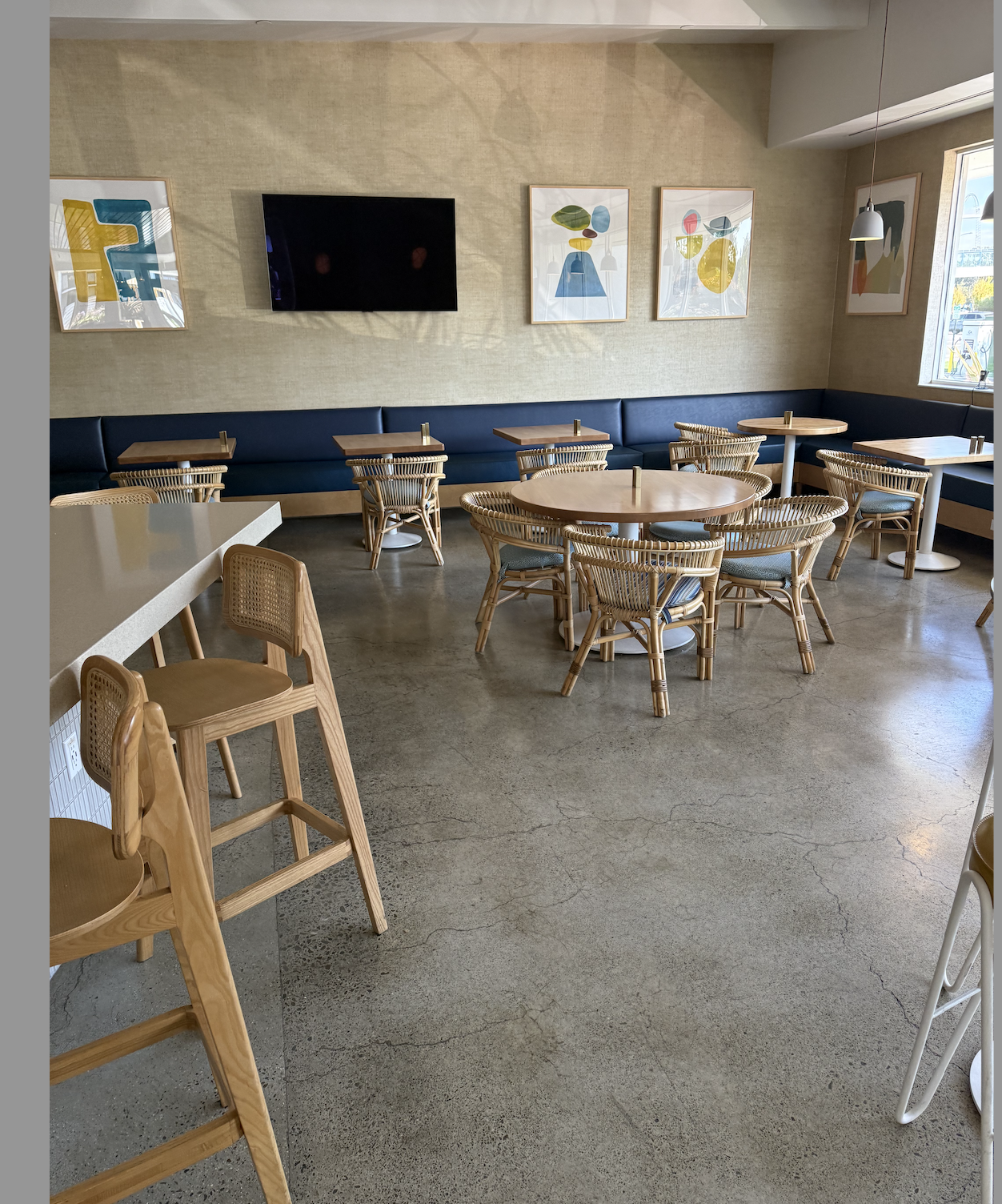
In this Santa Clara restaurant, our team specifically executed the commercial booth reupholstery and internal seating modifications, coordinating seamlessly with the surrounding blonde wood banquette casings and light maple dining tables.
However, full-service furniture care frequently involves addressing the adjacent woodwork. Wood refinishing is a cornerstone service at Marina’s Crafts, providing restaurants, hotels, and retail venues with a single, experienced partner for complete architectural furniture preservation.
┌────────────────────────────────────────────────────────────────────────┐
│             INTEGRATED COMMERCIAL INTERIOR PRESERVATION                │
├───────────────────────────────────┬────────────────────────────────────┤
│   COMMERCIAL BOOTH REUPHOLSTERY   │     PROFESSIONAL WOOD REFINISHING  │
├───────────────────────────────────┼────────────────────────────────────┤
│ • Ergonomic foam rebuilding       │ • Onsite table top restoration     │
│ • CAL 117 compliance & safety     │ • Chemical-free mechanical sanding │
│ • High-Wyzenbeek friction ratings │ • Heat, moisture & alcohol topcoats│
│ • Heavy-traffic seam reinforcement│ • Frame repair, re-gluing & dyes   │
│ • Antimicrobial, easy-clean vinyl │ • Architectural tone matching      │
└───────────────────────────────────┴────────────────────────────────────┘
Extending Life to Restaurant Dining Tables and Bar Tops
Dining table tops, bar counters, and wooden banquette caps face heavy daily abuse from:
Condensation rings from cold beverages
Hot plate heat transfers
Alcohol spills and acidic citrus exposure
Harsh surface sanitizers stripping factory lacquer finishes
Just as compressed booth cushions degrade the perception of a venue, scratched, discolored, or sticky table surfaces undermine an otherwise pristine dining atmosphere.
At Marina’s Crafts, our wood restoration process avoids the shortcut harsh chemical stripping agents that break down wood grain fibers. Instead, our artisans rely on precision mechanical sanding, custom-matched organic and industrial stains, and durable commercial conversion varnishes or polyurethane topcoats engineered specifically to resist heat, alcohol, and commercial sanitizers.
Whether a venue requires the reupholstery of modern dining booths, complete restoration of solid wood community tables, or a total interior refresh, our capabilities allow hospitality operators to modernize their furniture assets holistically.
Comparison: Reupholstery vs. Complete Furniture Replacement
For restaurant managers, hotel operations directors, and commercial developers evaluating interior renovations, repairing and reupholstering existing furniture assets offers distinct operational advantages over buying new:
Feature & Operational FactorReupholstery & Ergonomic Customization (Marina’s Crafts)Total Seating Replacement (New Purchases)Capital Expenditure40% to 65% cost savings compared to purchasing new commercial banquettesPremium costs including new framing, logistics, and delivery surchargesOperational DowntimePhased, scheduled turnaround; modular sections completed during off-hours or targeted closuresMulti-week lead times, manufacturing delays, and disruption from full site demolitionCustom Architectural FitBuilt-in dimensions preserved; exact fit against existing baseboards, outlets, and wall runsStandard stock dimensions often require costly drywall and electrical adjustmentsErgonomic TuningCushion firmness, pitch, and height can be custom-tuned to existing table heightsFixed, non-adjustable factory ergonomics that may clash with existing furniture heightsEnvironmental FootprintSustainable and eco-friendly; solid wood frames and hardware stay out of landfillsSignificant waste generation from discarding solid structural timber frameworksMaterial PerformanceDirect choice from commercial grade, high-abrasion, wipe-clean performance textilesOften restricted to standard, lower-durability stock upholstery grades
Commercial Interior Services Offered by Marina’s Crafts
From our local workshop serving Pacifica, San Francisco, the Peninsula, and Silicon Valley communities like Santa Clara and San Jose, Marina’s Crafts supports business owners, architects, and interior designers with tailored restoration solutions:
1. Restaurant Banquette & Booth Reupholstery
Custom fabrication and complete resurfacing for straight, curved, corner, and island banquettes
Deep-button tufting, channel-back stitching, and clean modern minimalist designs
High-traffic commercial vinyl, Crypton fabrics, and top-grain commercial leathers
CAL 117-compliant, high-density antimicrobial foam replacements
2. Hospitality Wood Refinishing & Frame Restoration
Commercial dining table top refinishing and protective scratch-resistant clear coating
Bar top refinishing, stain color alterations, and structural joint re-gluing
Hotel headboard, credenza, and lobby millwork repair and cosmetic spot touch-ups
Elimination of surface scratches, water rings, bleach spots, and UV fading
3. Commercial Seating Upgrades & Ergonomic Engineering
Foam density adjustments to correct low or uneven seating
Reinforcement of loose legs, wobbly joints, and damaged sub-frames
Spring system repairs, coil-tie replacements, and elastic webbing reinforcement
Best Practices for Maintaining Commercial Hospitality Upholstery
To extend the lifespan of newly reupholstered dining booths and maintain guest-ready presentation daily, hospitality operators should establish standard maintenance protocols:
DAILY MAINTENANCE
├── Wipe surfaces using warm water and mild, pH-neutral soap
├── Inspect crevices and seam lines with a soft-bristle brush
└── Remove grease, condiment, and wine spills immediately

WEEKLY MAINTENANCE
├── Check corner anchoring screws and baseboard hardware
├── Sanitize surfaces using fabric-safe, manufacturer-approved solutions
└── Inspect for any sharp object punctures or seam abrasions

QUARTERLY PREVENTATIVE CHECKS
├── Review foam elasticity and return-rate across high-use zones
├── Inspect adjacent wood finishes for moisture intrusion or wear
└── Touch up minor wood scuffs along floor-level kickplates
Use pH-Neutral Cleansers: Harsh chemical degreasers or bleach-based sprays break down the protective topcoat of commercial vinyl, making it brittle and prone to cracking. Use mild, pH-neutral soapy water or certified hospitality vinyl cleaners.
Address Seams Regularly: Crumbs, salt, and abrasive debris collect along the crease where the backrest meets the seat cushion. Vacuum or wipe clean daily to prevent abrasive particles from cutting into threads.
Inspect Floor Anchors and Kickplates: Floor-level kickboards often take impacts from patron shoes and cleaning mops. Inspecting these contact points prevents deeper structural damage to the framing above.
Elevate Your Commercial Dining Space with Marina’s Crafts
The Santa Clara hotel restaurant project highlights the impact of thoughtful seating restoration. By preserving the solid architectural foundations, redesigning the internal cushion geometry for ergonomic comfort, and upholstering in sleek, durable performance vinyl, the dining room gained a contemporary, guest-ready ambiance built to withstand years of active service.
Whether you operate a restaurant in Santa Clara, manage a hotel lounge in San Francisco, or need complete furniture refinishing and reupholstery across the Bay Area, our experienced team delivers exceptional craftsmanship with minimal disruption to your operations.
Marina’s Crafts
Phone: (650) 580-3897
Email: marina@marinascrafts.com
Service Area: San Francisco, San Mateo County, Santa Clara, Silicon Valley, and the Greater Bay Area
Specialties: Commercial Banquette Reupholstery | Wood Table & Bar Top Refinishing | Custom Architectural Seating Modifications